The exoskeleton market may still be in its infancy, but recent advances in this field are undeniable.
According to a recent article in the medical journal The Lancet Neurology, today's commercially available exoskeletons have come a...


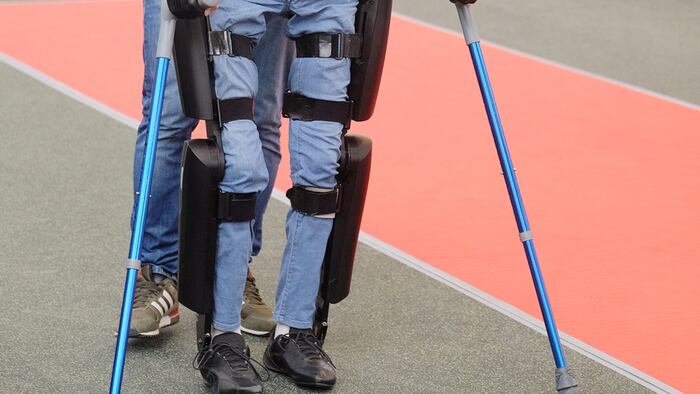
When it comes to helping patients recover from spinal cord injuries and stroke, the use of exoskeletons – a robotic suit that supports a person's weight and helps them move their limbs – is gaining traction by physical therapists in rehabilitation centers and clinical settings. Several exoskeleton companies such as ReWalk, Ekso Bionics and Parker Hannifin are already marketing their own versions of these smart, robotic-assisted body suits in various countries worldwide. Despite facing significant barriers, such as high device cost and lack of reimbursement, recent advances in robotics, microelectronics, battery technologies and product designs are the driving forces behind the continuous innovation in this field. Companies hope the dramatic life-changing impact exoskeletons have today in helping the paralyzed will also have implications for other mobility-challenged individuals, including those living with Parkinson's disease, multiple sclerosis, cerebral palsy and the elderly.
The exoskeleton market may still be in its infancy, but recent advances in this field are undeniable.
According to a recent article in the medical journal The Lancet Neurology, today's commercially available exoskeletons have come a...


In this week’s Digital Health Roundup, Medtech Insight’s Ryan Nelson highlights Click Therapeutics’ FDA-cleared digital therapeutics (DTx) for depression and Sinaptica Therapeutics’ personalized neuromodulation for Alzheimer’s patients. Marion Webb discusses her interview with MindMaze’s John Krakauer on their gaming-focused DTx to help people recover from serious brain injuries. Elizabeth Orr introduces new voting members of the new Digital Health Advisory Committee and Natasha Barrow discusses Hello Heart’s new symptom-tracking feature in their heart-focused app.
This week, Establishment Labs Holdings announced the FDA gave it premarket approval for Motiva breast implant, Cologuard lands FDA approval for Cologuard Plus and GE HealthCare gets FDA nod for a new imaging agent. The FDA announces another expansion for TAP into ophthalmology and radiology. The AAMI and CTA will join forces to develop standards for AI and ML-enabled health care products.
Patrick Alexandre, Crossject CEO, discusses crucial developments happening for Zeneo, a needle-free injector, functioning intramuscularly to administer medication in a tenth of a second.
An additional $50m brings the neurovascular intervention specialist’s total Series F funding to $82m. Route 92 says it will use the capital to build its sales and support teams and pursue regulatory authorizations around the globe for its FreeClimb portfolio while advancing its SUMMIT MAX clinical trial for the investigational Monopoint Reperfusion System.
Biopharmaceutical giant AstraZeneca has partnered with start-up “unicorn” Owkin to develop an AI-powered tool to prescreen for gBRCA mutations on the basis of morphological features in digitized pathology slides. Built on extensive, high-quality data sourced from the France-based PortrAIt consortium, the AI will help to prioritize patients for further testing, streamlining the diagnostic process, Owkin says.
An additional $50m brings the neurovascular intervention specialist’s total Series F funding to $82m. Route 92 says it will use the capital to build its sales and support teams and pursue regulatory authorizations around the globe for its FreeClimb portfolio while advancing its SUMMIT MAX clinical trial for the investigational Monopoint Reperfusion System.
TRiCares announced first implantation of the Topaz transfemoral tricuspid heart valve replacement system as part of the company’s EU pivotal study. If all goes to plan, the device will compete with Edwards’ Evoque system. The announcement follows the company’s $50m series D funding raise in July.