


Medtech Insight speaks with industry experts about trends and innovations with potential to transform cancer care.
Matt Bettonville, investor at venture capital firm Yosemite, considers it a fantastic opportunity to be working with a team that’s building and defining the intersection between digital health and oncology.
In his view, the future of cancer care is data-driven, highly complex and expensive, demanding a rethinking of how cancer care is delivered.
“When you look at the pipeline of new therapies and diagnostics coming to market, this is really Sci-Fi stuff and presents real care delivery challenges – it’s not as simple as a new pill is approved and we distribute it through your local pharmacy,” Bettonville told Medtech Insight.
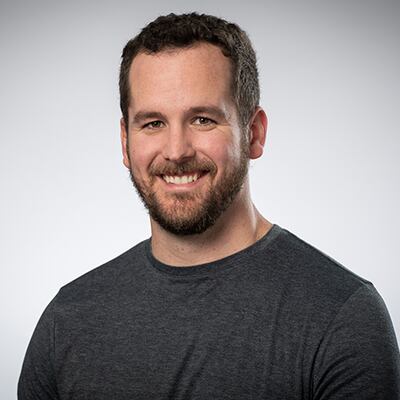
With the mission “to make cancer non-lethal within our lifetime,” Yosemite was spun out last August from investment, philanthropic and advocacy group Emerson Collective, where Bettonville was a director of Venture Investing, Health since 2016.
Led by Reed Jobs, the son of Steve Jobs, and Emerson founder and president Laurene Powell Jobs (Reed’s mother), Yosemite has raised more than $200m from investors and institutions such as the Memorial Sloan Kettering Cancer Center and MIT to fund innovation in cancer. The firm stands apart from many other VCs in that it invests equity in start-ups and provides grants to academic researchers.
Bettonville declined to disclose funding recipients to date, citing compliance reasons. But according to Pitchbook, Yosemite has made investments in such start-ups as Turqouise Health, whose platform equips patients, providers, employers and other stakeholders with price transparency to better analyze health care costs, and Maia Oncology, a virtual primary care clinic for cancer patients and survivors.
The interview that follows has been slightly edited for content and length.
Medtech Insight: What criteria do you have for evaluating potential investments in the oncology sector?
Matt Bettonville: Oncology is at the frontier of many of the most important evolutions in health care. In particular, oncology is at the frontier of precision medicine. It is the field of health care that has led the way in genetic subtyping of disease … [and] the space that leads the way in the delivery of health care using data to make decisions – for example, of what types of therapies to use. The literature in oncology is growing faster than is possible for an individual to keep up with. Today, even the most sub-specialized oncologists need to be using some type of computer system to deliver the best care. I really feel that’s setting the future direction where all of health care is headed. We really look at a lot of health care data companies. Companies that have really interesting novel sources of data, but also ways to use data in health care workflows. We have a number of investments in that area. Another big area we’re excited about is where oncology intersects with the evolution of the health care system towards more and more remote and hybrid care delivery. That’s an area we thought was extremely important even before the COVID pandemic. We were deeply interested in that space because of how many cancer patients will travel, or even move, to be seen by the right sub-specialist for their type of cancer. And only those with the right means can do so. We’ve been wanting to invest in evolving a system toward something where the right expertise can be delivered to the right patient.
How do you see the oncology investment landscape evolving over the coming years?
Bettonville: When you look at the pipeline of new therapies and diagnostics coming to market, this is really Sci-Fi stuff and presents real care delivery challenges – It’s not as simple as a new pill is approved and we distribute it through your local pharmacy.
When we're talking about advanced cell therapies, often these involve extraction of your own blood cells, sending them to the lab, reengineering them, distributing them back to the patient and re-infusing them. It's a very complicated bioengineering process that needs to be delivered in legacy care settings.
When we talk about radiopharmaceuticals where we're infusing patients with active radioisotopes in place of, or in addition to, particle accelerator radiation therapy, these have to be delivered in lead vaults in the basement of health care systems.
When you talk about pan-cancer blood tests, these often can have ambiguous results that require a reinvention of our system for screening cancer in order to handle long-term surveillance of borderline disease.
There’s so much innovation happening in the biotechnology pipeline, and every one of those requires a rethinking of some process of delivering care once it comes to market. The FDA approval isn't the end of the process – it’s really the beginning of us standing up a new treatment regimen.
I think over the next decade, bringing all of those to market and all of the complexities that come with them – getting them to the right patients, because many of them are extremely expensive – is going to be a real challenge in the field of cancer care delivery.
What are some of the emerging trends and technologies you’re most excited about?
Bettonville: We’re really interested in all kinds of models that can deliver more parts of the health care system to the patient – whether it’s in the home or resources that might be local to them like local drugstores or Walmarts. It’s looking at flipping the model so that we can keep patients in the home or at least in their local communities as long as possible before needing to escalate them to the high-touch inpatient services.
You said you’re not at liberty to discuss investments in start-ups. Can you talk about your investments in academia?
Bettonville: Our team has a vehicle to academic grant-making, which is one of most unique parts of our strategy. We really feel that we're trying to be an engine for the best ideas coming out of science and out of the diverse US health care system. We have many groups we work really closely with – groups like Memorial Sloan Kettering, Johns Hopkins, Fred Hutchinson institutes, Washington University in St. Louis. We have around 20 institutions that we kind of regularly check in with. We also go out and read papers and find the best projects and get to know the researchers and try to be a partner to whoever has the best ideas. We also launched a partnership with the American Cancer Society for this year’s grant-making process. They’re super aligned in the space and have an amazing network of researchers that they interface with.