

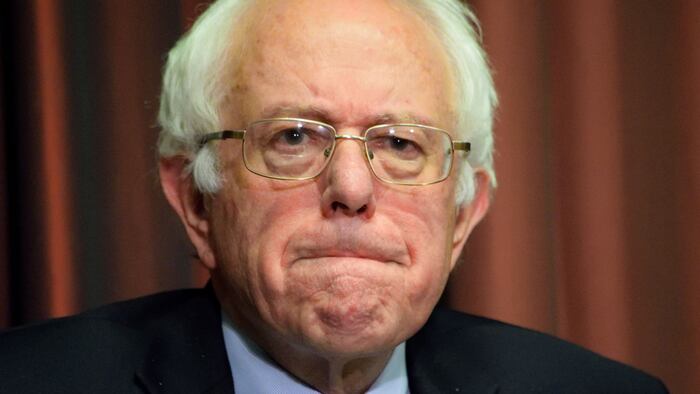
Senate Health, Education, Labor and Pensions Committee Chairman Bernie Sanders, I-VT, wants the CEOs of some companies that sell drugs undergoing the Medicare price negotiation process established by the Inflation Reduction Act to testify at an upcoming hearing on why the US prices of their products are so high.
In its description of the hearing, the committee challenges the prices of Imbruvica, which Johnson & Johnson co-markets with AbbVie Inc., Merck & Co., Inc.’s Januvia, and Eliquis, which Bristol Myers Squibb Company co-markets with Pfizer Inc., relative to prices for the drugs in other markets. But J&J and Merck believe it’s no coincidence that all three companies invited to testify are engaged in litigation aimed at shutting the negotiation program down.
Eight of the companies that market the drugs on the negotiation list have filed lawsuits against the Health and Human Services Department challenging the program. In addition to J&J, Merck and BMS, the plaintiffs include Novartis AG, AstraZeneca PLC, Boehringer Ingelheim GmbH, and Novo Nordisk A/S. (Also see "Novo Files Suit Over IRA As It Joins Others In Signing On To Price Negotiations" - Pink Sheet, 3 October, 2023.)
The HELP Committee will hold a vote on 31 January to determine whether to issue subpoenas to compel J&J CEO Joaquin Duato and Merck CEO Robert Davis to give testimony, Sanders announced on 18 January. The two CEOs previously declined a 21 November invitation to testify from Democrats on the committee. A third CEO who was also invited, Bristol Myers Squibb’s Chris Boerner, accepted the invitation on the condition that at least one of the other CEOs also testify, according to the HELP committee.
“It is absolutely unacceptable that the CEOs of Johnson & Johnson and Merck have refused an invitation by a majority of members on the HELP Committee to appear before Congress about the outrageously high price of prescription drugs,” Sanders said in the release.
“It is time to hold these pharmaceutical companies accountable for charging the American people the highest prices in the world for the medicine they need. As the HELP Committee considers legislation to lower prescription drug prices, it is critical that these CEOs explain how they determine the price of medicine in the United States.”
The hearing had been tentatively scheduled for 25 January, but that date is now in question unless J&J and Merck voluntarily concede to the committee’s request to testify before then. Sanders also recently launched an investigation of the high prices of asthma inhalers and the potential anticompetitive tactics the companies may have used to keep cheaper competition from the market as part of the committee’s work on drug pricing. (Also see "As Bernie Focuses On Older Drug-Device Combos, Can Innovators Catch Their Breath?" - Pink Sheet, 9 January, 2024.)
“Johnson & Johnson has deep respect for the Senate Committee on Health, Education, Labor, and Pensions’ work, and we have continued to engage with the committee on its proposed prescription drug hearing. As part of this engagement, we have expressed our concerns with the hearing as it is currently planned,” the company said in a statement.
J&J and Merck detailed their concerns with the hearing in separate 12 January letters to the committee declining the invitation for their CEOs to testify. “Johnson & Johnson offered to make available for the hearing the senior pharmaceutical executive best positioned to address and provide Johnson & Johnson’s position regarding the issues posed in your invitation letter,” the company said.
“Throughout these discussions, Johnson & Johnson has also made clear its concerns with the direction the committee is taking with the hearing, including the reasons that the company’s chief executive is not the appropriate witness.”
The Optics For Bernie
Having to use heavy-handed tactics to get the witnesses they want is never the way committee chairs want to launch hearings. It showcases the slow, grinding nature of legislating when voters want to see their concerns being addressed with a Hollywood moment in front of the cameras, not with a prolonged exchange of correspondence.
But Sanders likely would not have pressed the issue publicly if he didn’t think he had the votes to issue a subpoena, so the hearing will probably happen, and might even occur around the fifth anniversary of the last big Senate hearing featuring indistry CEOs, the 26 February 2019 Finance Committee hearing where seven Big Pharma execs testified. (Also see "Big Pharma Defuses Drug Pricing Landmines On Capitol Hill " - Pink Sheet, 26 February, 2019.)
The anniversary will highlight a stubborn truth about pharmaceutical pricing reform: despite considerable attention and widespread public support, progress is maddeningly slow, whether you are a pharmaceutical sponsor hoping for curbs on PBM rebating or 340B abuses, or a democratic socialist from Vermont hoping to enact universal public health insurance.
Of course, it’s not that there’s been no progress: The Medicare drug pricing setting program was enacted as part of the IRA. (Whether that progress is good or bad depends on your perspective). That achievement likely also means that the Sanders’ hearing will be less bipartisan that the 2019 event: Democrats hold the gavel now, and Republicans will probably criticize the new law, which they see as limiting plan offerings and stifling Rx innovation.
The IRA also creates something of a problem for Sanders and the Democrats on the committee. The drugs they are going to be complaining about during the hearing will soon be much cheaper, at least for the Medicare program, so their rhetoric and questions must simultaneously take credit for that pending price cut while making the case that more needs to be done.
Sanders has “opted not for the most effective way of securing information relevant to the committee’s important work on drug prices, but for a broad-ranging public spectacle, with witnesses you can question on pending litigation you disagree with. On that you are so focused that you are willing to threaten to issue the HELP Committee’s first ever subpoenas to compel testimony,” Merck told the chairman.
The J&J letter indicates the committee expressed interest in focusing on Xarelto and Stelara in addition to Imbruvica, two other drugs that have also been selected for Medicare price negotiation.
The firm argued that it does not control both the US and ex-US pricing for Imbruvica and Xarelto because it collaborates with other pharmaceutical companies on the marketing of those drugs, so is not best positioned to address the disparity between pricing in the different geographic regions. And Stelara will be subject to biosimilar competition in early 2025 and “each biosimilar company will set its own price for its product,” the letter says.
In addition, “and more importantly,” the committee staff and Sanders’ public comments “have indicated that the hearing is intended to focus on the Inflation Reduction Act and, specifically, the companies that pursued litigation challenging certain aspects of the statute. Indeed, the committee has chosen to invite the CEOs of three select companies that are currently engaged in such litigation,” J&J continued.
“This targeting seems unlikely to be coincidental, and it raises significant concerns that the hearing is intended as retribution for the companies’ decisions to exercise their rights to challenge a statute that inappropriately infringes on constitutionally protected freedoms,” J&J stated. “Moreover, these litigations are ongoing, and the issues raised in the litigation should be properly resolved in a courtroom, not in a committee hearing.”
The committee’s insistence on having Duato testify instead of other company executives, “unfortunately elevates our concerns that the hearing is being called to punish the companies who have chosen to engage in constitutionally protected litigation. As you know, the Supreme Court has held that such motivations are not a legitimate legislative purpose upon which Congress can seek testimony or hold a hearing,” the letter asserts.
Merck Worries Hearing Is ‘Retaliation’
Merck’s letter echoes those concerns. “The decision to invite only the three companies you have selected … raises serious questions about whether the hearing is being planned in service of a valid legislative purpose and consistent with the First Amendment,” the company said.
“As the HELP Committee is aware, Merck, J&J, and BMS … have filed lawsuits challenging on constitutional grounds the provisions of the Inflation Reduction Act of 2022 that created the ‘drug price negotiation program.’ The structure and operation of that program are inconsistent with basic constitutional norms, and the companies are entitled to air and seek resolution of their Constitutional objections before an Article III court.”
Sanders’ “public criticisms of the companies for challenging the IRA and comments regarding hearing witnesses indicate that the invitations to testify have been extended as retaliation for the companies’ exercise of their constitutional right to seek relief in court,” Merck continued. “Retaliation may be a way to chill disfavored speech, but it is not a valid basis upon which to hold a constructive hearing.”
The invitation to the hearing “came on the heels of substantial media coverage of both Merck’s IRA lawsuit (the first to be filed) as well as media coverage of the briefing in BMS’s and J&J’s IRA lawsuits, which was completed days before your letters issued,” the letter continues. “These circumstances, considered alongside the statements mentioned, reinforce the inference that the invitation is the product of retaliatory animus.”
Sanders has “opted not for the most effective way of securing information relevant to the committee’s important work on drug prices, but for a broad-ranging public spectacle, with witnesses you can question on pending litigation you disagree with. On that you are so focused that you are willing to threaten to issue the HELP Committee’s first ever subpoenas to compel testimony,” the letter asserts.
Public Citizen applauded the committee’s upcoming consideration of subpoenas for the J&J and Merck CEOs in a statement. “J&J and Merck are resisting Medicare price negotiation and doing their worst to unmake it, including by suing HHS,” a spokesperson for the group told the Pink Sheet. “Their prices are outrageous. They should stop fighting Senate HELP, stop fighting HHS, stop fighting the American people, and work with HHS to make their medicine more affordable, as indicated by IRA.”
[Editor's note: This story was updated after publication to correct the names of the companies who have sued HHS over the Medicare negotiation program].