High-Dose Eylea’s Improved Durability Could Protect Regeneron’s Market Share
As Roche’s Vabysmo Mounts Threat
• By Ayisha Sharma
Generate a summary of this article
Listen to this article
The US firm’s high-dose reformulation of Eylea reduced dosing burden for patients with DME and wet AMD in two pivotal studies and could match Roche’s rival drug.
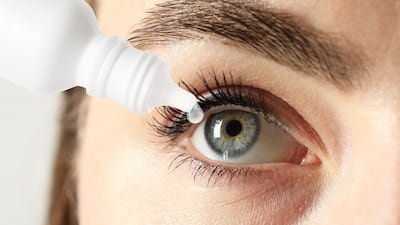
Eylea Biosimilars Could Reach The Market In 2024 • Source: Shutterstock
Regeneron Pharmaceuticals, Inc. and Bayer AG’s Eylea has shown improved durability at a higher dose in two pivotal ocular disease studies, helping retain its competitiveness against the likes of Roche Holding AG’s Vabysmo.
The Phase III PHOTON and PULSAR studies investigated aflibercept, the active ingredient in Eylea, at a high 8mg dose in...
Keep up with the top pharma business news of the week. On the go.
Tarsus Pharmaceuticals is putting more sales and marketing heft behind its novel eyelid disease therapy, Xdemvy, to capitalize on a solid start in a previously untapped market.
The group has stopped further development of the IL-17A inhibitor in hidradenitis suppurativa and psoriatic arthritis, and intends to pivot to a thyroid eye disease therapy.
The company said earlier this year that it would resubmit reproxalap for US FDA approval before the end of 2024 once it completed another Phase III trial and is eyeing both acute and chronic use.
Pipelines in bioconjugates continue to develop, from ADCs to XDCs, with radionuclide drug conjugates (RDCs) and antibody-oligonucleotide conjugates (AOCs) leading the expansion.
Interim results from the Phase III REMARK study presented at WCLC showed the Chinese company’s second-generation ALK/ROS1 inhibitor met its primary endpoint as a first-line therapy in ALK-positive advanced NSCLC.