
AAX Biotech is hoping to become one of the next success stories to be spun out of Sweden's Karolinska Institutet and a former student of the world-renowned medical university has been tasked with driving the group forward.
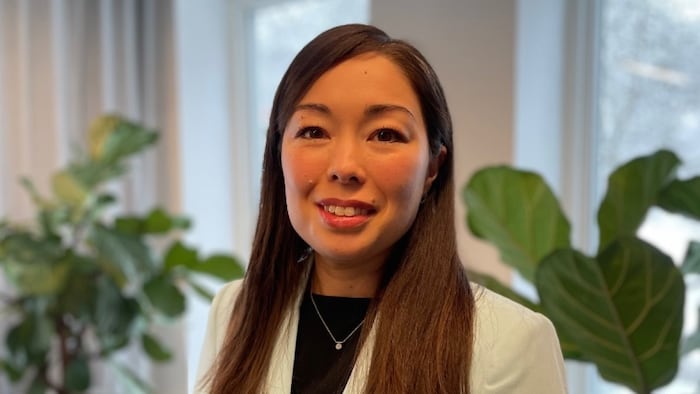
Maria Lisa Knudsen was appointed as CEO in July 2023, joining from fellow Swedish company Salipro Biotech AB where, as business development director, she was involved in out-licensing its technology platform which stabilizes membrane proteins, as well as establishing an internal pipeline. Knudsen, who obtained a PhD in infection biology from the Karolinska, told Scrip at the Nordic Life Science Days meeting in Copenhagen at the end of last year that she was impressed with AAX's unique technologies that can be used to develop next-generation antibody therapies such as bispecific antibodies and CAR-T cell treatments for cancer.
"The opportunity to be CEO and grow the company was something that I found very attractive and exciting," she said, noting that AAX, which was technically founded in 2020 by Mats Persson and Daniel Johansson but became operational in 2023, is currently part of DRIVE, the life science incubator program run by the Karolinska's KI Innovations unit. Knudsen noted that DRIVE offered a wide range of support from business development coaching to intellectual property advice, adding that the Karolinska campus "has changed a lot since I did my PhD there, it's completely different now with lots of startups and also bigger companies."
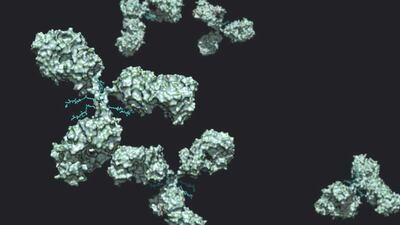
As for her company, AAX can boast not one but two technologies which both aim to produce more effective antibody-based medicines. The first is Opti-mAb which improves the stability and production of single- chain variable fragments (scFv), an antibody format used in CAR-T and bispecifics. While scFv antibodies offer numerous advantages, the inherent instability issues with scFv lead to high development costs and poor therapeutic performance.
Knudsen said that because of the problems like aggregation and stability, "many drug developers have been moving away from a single chain antibody format because it's so tricky to work with and have been using some other formats instead as kind of a compromise. The fact that we can actually solve the problem with scFv with Opti-mAb allows drug developers to use the single chain." She added that "bispecifics and CAR-T are the two that we've been talking about because they have an obvious huge potential but we're also very open to exploring other applications."
AAX's second technology is Seqitope, which the company says is an innovative method for antibody epitope mapping which yields high-resolution results while also being high throughput. Up to a hundred monoclonal antibody candidates can be run in parallel, which means that "instead of waiting until later on in the drug development or discovery process, this would open up to a possibility where companies can epitope map early on and not waste time on the wrong candidates," Knudsen said, as well as significantly reducing the cost of epitope mapping.
Just a couple of days before Knudsen spoke to Scrip last December, AAX inked a deal with fellow Swedish biotech Oblique Therapeutics to apply Seqitope to characterize antibody candidates of the latter firm’s pain program targeting transient receptor potential vanilloid receptor 1. She said that the firms intended to work jointly on future candidates for other indications as well, stating that this was the start of a broader and long-lasting collaboration."
Knudsen is looking to ink more partnerships for both technologies and "we've started to have some conversations. It's still early but let's see where it goes." On the financial front, "we have enough money for another year or so," she noted, thanks principally to the backing of life sciences investment group Sciety.
AAX has a small team of three full-time staff, recently supplemented by the appointment of Juan Astorga-Wells, a co-founder of three biotech companies and the holder of several patents, as senior manager of science and development. Knudsen also noted that the "diverse expertise" of two new board members - manufacturing specialist and entrepreneur Svante Almkvist and medical affairs and market access expert Emmelie Persson - will be of great value going forward.