


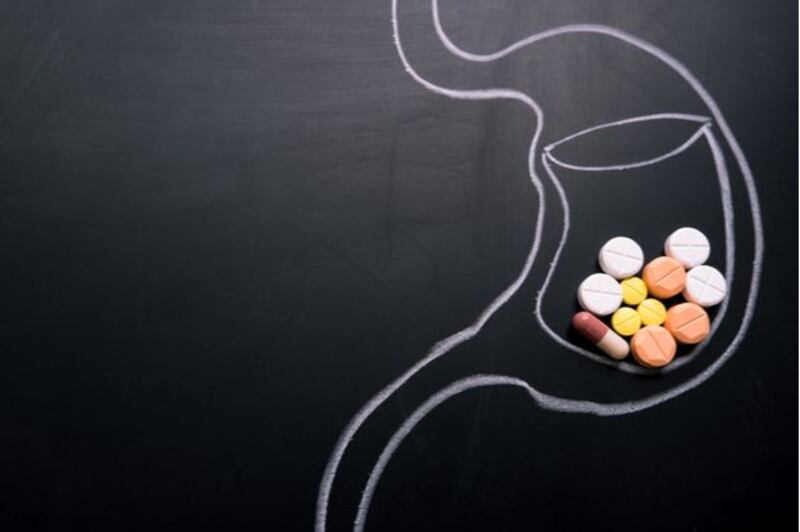
Someday soon, your medicine cabinet will have pills not just for you, but also for the microbes in your gut.
These pills will “treat and inhibit an enzyme in our microbes and elicit a health benefit in some chronic disease,” said cardiologist Stanley Hazen, MD, PhD, co-head of the Preventive Cardiology and Rehabilitation, Heart, Vascular and Thoracic Institute and director of the Center for Microbiome and Human Health at Cleveland Clinic.
How can he be so sure?
Because evidence is mounting that the gut microbiome influences just about every major human disease. These trillions of microbes use our food to make substances called metabolites that can protect or harm our health, with consequences reaching far beyond our digestive tracts.
Research has linked microbial metabolites to diabetes, cardiovascular disease, liver disease, obesity, high blood pressure, neurological disorders, depression, cancer, and more. Gastroenterologist Christopher Damman, MD, a clinical associate professor at the University of Washington Medical Center, Seattle, calls it a “growing theme” in microbiome science.
Now scientists are developing treatments targeting gut microbial pathways, designed to eliminate the bad metabolites and boost the good metabolites.
All About Your Microbiome
1/14
What Is It?
Did you know your body is home to trillions of tiny organisms called microbes? No worries -- those “bugs” are supposed to be there! Together, they make up your microbiome. It’s all over your body but mainly in your gut. Your microbiome is closely tied to your health in ways you might not expect. And researchers are studying how it might improve health from head to toe.
2/14
Your Skin
That doesn’t mean you’re dirty. Your microbiome helps keep your skin healthy. An imbalanced microbiome can lead to skin problems. For instance, too many pimple-causing bacteria can lead to acne. The allergic skin condition eczema is linked to another type of bacteria.
3/14
Your Weight
Your microbiome may change as you gain and lose weight. Some studies have found that overweight people tend to have more of the types of microbes that harvest energy from food and help the body store fat. This can set the stage for weight gain -- and it may be related to eating too much fat, sugar, and carbs with little fiber. But other researchers say it’s too early to know the exact links between the microbiome and the scale.
4/14
Brain Health
Your gut and your brain talk back and forth to each other, connecting through millions of nerve cells. Scientists have linked certain changes in the gut microbiome to stress, depression, and anxiety. It may also be tied to Alzheimer’s disease. One study found people with Alzheimer’s have less diverse microbiomes. This may lead to inflammation and a rise in proteins related to Alzheimer’s disease. But that’s not yet certain.
5/14
Your Mouth
There are more than 700 types of bacteria in your mouth. A few types of bacteria turn the sugar from food into acid. If you don’t brush them away, the acid can eat into your teeth’s enamel. This causes cavities. Experts also think that certain microbes may trigger inflammation in the mouth, leading to gingivitis and gum disease. People who tend to get cavities have a different microbiome than those who don’t.
6/14
Autoimmune Diseases
With these conditions, your immune system attacks certain parts of your body. Examples include fibromyalgia, lupus, multiple sclerosis, rheumatoid arthritis, and type 1 diabetes. They tend to run in families, and some researchers think that they may be passed down through the microbiome.
7/14
Allergies and Asthma
The microbes in your gut and lungs may lead to allergies and asthma. These conditions cause your immune system to attack harmless substances, such as dust. In fact, the microbiome may be one reason why allergies and asthma are on the rise. Over the past 30 years, rates have tripled. Some experts think that microbiome changes from antibiotic use and a shift in diet may be part of the reason for that.
8/14
Inflammatory Bowel Diseases
These are a group of conditions that cause your intestines to become inflamed. They include Crohn’s disease and ulcerative colitis. The way your gut microbes affect the cells that line your intestines may play a role in these diseases. Certain types of bacteria may irritate the intestines. Some people with Crohn’s disease have a gene glitch that lets gut bacteria enter the intestine’s walls. This can trigger inflammation.
9/14
When You’re Born
Like a fingerprint, your microbiome is unique. Some of it may come from your mom, depending on how you were born. During vaginal delivery, babies get coated in their mother’s microbiome as they go through the birth canal. But that doesn’t happen in a C-section. Research shows that babies delivered by C-section are more likely to grow up to have allergies, but it’s not clear why.
10/14
A New Area of Medicine
Scientists are looking for ways to improve the microbiome to help people avoid certain diseases or respond to treatments better. But some medicines can harm it. One round of antibiotics can change your microbiome for up to a year. (Antibiotics don’t just kill the bacteria that make you sick. They also kill your helpful gut bacteria.) And a study of more than 1,000 drugs showed that 1 in 4 affected bacteria growth. These included blood pressure, cancer, and diabetes medications.
11/14
It May Help Fight Cancer
Researchers are working to harness the power of the microbiome in cancer treatments. With immunotherapy, your body’s immune system destroys cancer cells. Research shows that the microbiome helps these drugs work better by sending signals to immune cells. Scientists are working on creating microbiome medicines that can be given alongside cancer treatments.
12/14
It Can Change
Your microbiome includes both “good” and “bad” bacteria. They create a healthy balance in the body. Some things, such as certain diets or antibiotics, can disrupt it. But your lifestyle can help it. Imbalances in the microbiome have been linked to a wide range of conditions, including Alzheimer’s, cancer, and immune system diseases. But doctors don’t yet know if the microbiome is to blame or is an innocent bystander.
13/14
How to Help Your Microbiome
Simple daily habits make a difference. What you eat can change the microbes that live in your body. High-fiber foods (such as veggies, whole grains, and fruit) feed the helpful bacteria in your colon. They also discourage the growth of some harmful ones. Probiotic foods, such as yogurt and pickled vegetables, also deliver helpful bacteria to your gut. Getting enough sleep, easing stress, and exercising may also improve your microbiome.
14/14
Should You Take Probiotics?
Each year, Americans spend more than a billion dollars on probiotic supplements. Do they work? The jury’s still out. Not all probiotics are the same, and everyone has different microbiomes. A supplement that’s helpful for someone may not have an effect on another person. Talk to your doctor. Probiotics are usually safe for healthy people. But those with health conditions may need to steer clear.
One close to use in humans is an oral treatment from Hazen’s lab targeting the metabolite trimethylamine N-oxide (TMAO), a predictor of and contributor to both cardiovascular disease and chronic kidney disease. The drug, which blocks TMAO formation, is nearing clinical trials, Hazen said.
The advantage is safety. By targeting the microbe instead of, say, an enzyme, the host (you) must absorb little if any drug.
Implications for the future of medicine are huge. “Gut microbial pathways contribute to diabetes, obesity, virtually everything,” Hazen said. “Therapies that target gut microbiome processes will probably even be used for psychiatric disorders within, I’ll say, 10 or 20 years.”
Of the 1,000-plus metabolites linked to the gut microbiome, scientists have flagged several that matter.
- Short-chain fatty acids. When we eat fiber, colon bacteria ferment it into beneficial short-chain fatty acids. These bind to receptors in muscle, liver, and fat tissue, affecting gut hormones and peptides related to appetite, inflammation, energy expenditure, and fat burning.
One of these fatty acids, called butyrate, has been linked to health benefits. It strengthens the gut’s lining, stifling bad gut bacteria, fighting cancer-promoting inflammation, and protecting against obesity and diabetes. It can function as a prebiotic, helping beneficial bacteria thrive. And recent studies linked an abundance of butyrate-producing bacteria with reduced bone fracture risk and hospitalization for infectious disease.
- TMAO. When we eat foods rich in animal proteins – especially red meat – some gut bacteria convert nutrients like choline and L-carnitine into TMAO. Research done by Hazen’s lab and copied by others has linked the metabolite to heart problems.In a landmark study from Hazen’s group, healthy adults who went on to get coronary artery disease had significantly higher TMAO levels than those who did not wind up with the condition. The link remained strong, even after controlling forrisk factors like age, sex, smoking, high blood pressure, and high cholesterol. In mouse studies, higher TMAO enhanced cardiovascular disease. Research suggests TMAO may harm cells that contract and relax the heart in dozens of ways, such as activating proteins to promote thickening and scarring, and decreasing the function of mitochondria (the powerhouse of the cell).
- Tryptophan metabolites. Microbes in your colon can convert the amino acid tryptophan, also found in animal-based foods, into chemical messengers like serotonin and melatonin.“The enteric nervous system, the nervous system around the gut, is immense,” said James Versalovic, MD, PhD, a professor of pathology and immunology at Baylor College of Medicine, Houston. “The gut-brain axis has become a very fertile area of research.”Other tryptophan metabolites – like indole, tryptamine, and indoleethanol – have been linked to benefits like fortifying the gut barrier, promoting the release of the hormone glucagon-like peptide 1 (GLP-1) to reduce appetite, and protecting the liver from hepatitis. But indole can also spur the production of indoxyl sulfate, a toxin linked to chronic kidney disease.
- Bile acid byproducts. Your gut bugs also feast on (and transform) bile acids before they’re reabsorbed and travel back to the liver.Research is gaining traction on these secondary bile acids, which can affect inflammation and immune function in helpful and harmful ways.One area of interest is how microbes break down hormones in bile. A recent study from Harvard showed that gut microbes turn a type of hormone known as corticoids into progestins, substances linked to postpartum depression risk. And researchers are exploring the estrobolome – a collection of gut bacteria that break down estrogen. These bacteria impact estrogen levels, which in turn can influence things like weight and mood.
What You Can Do Now
Advances in the field of microbiome research – and the related “gut health” wellness craze – have spawned all kinds of new microbiome-based products, like over-the-counter probiotic supplements and at-home test kits, which let you send a stool sample for analysis to reveal microbiome health and personalized diet recommendations.
But the science behind these tests is still evolving, said Damman. “The clinical inferences and applications are still pretty limited.”
For most people, the first step to fostering healthier microbial metabolites is much simpler: Diversify your diet.
“A lot of folks are missing that diversity,” Damman said. “Eat foods and experiment with foods that you might not eat all the time,” especially fruits, vegetables, nuts, seeds, and beans.
Another strategy: Eat foods with probiotic bacteria. “I view it as an insurance policy,” said Versalovic, “fortifying my gut with probiotics, with daily yogurt, for example, at breakfast.”
Microbiome’s Medical Future: ‘We Are on the Cusp of a New Era’
In just a few years, artificial intelligence (AI) models could predict the makeup of your gut based on data such as your diet and household characteristics, Kumar said.
Advancements in metabolomics and bioinformatics could soon help doctors and patients personalize their treatment approaches, said Damman.
One focus will be on fortifying the gut with whatever it lacks.
“In those individuals where certain microbes are missing, (a) how could we add them back potentially in a rational, science-driven way, and (b) maybe some of those factors that the microbes are producing out the other ends, you could give directly,” said Damman.
For example, multiple companies make butyrate as a dietary supplement, although the research is too early to support widespread use. Another option could be eating something that spurs butyrate production. One small study found that a fiber supplement made to increase butyrate levels in the colon reduced people’s systolic blood pressure by an average of six points.
Another option could be synbiotics, products that combine bacteria and what they feed on.“If you just give a diet-based therapy, it is not going to work as much. Because what if that diet needs certain bacteria to have these beneficial metabolites?” said Ashutosh Mangalam, PhD, an associate professor of pathology at the University of Iowa Carver College of Medicine, Iowa City.
Gut microbial metabolites could also affect disease screening and intervention. What if gut microbe sequencing could predict a pregnant person’s risk of developing depression, something now assessed through simple questionnaires?
“Imagine that your doctor says, ‘OK, give me a poop sample,’ ” Bernabé said. “Then they phenotype it, and then they put it in your electronic medical record, and they say, ‘Well, you have high likelihood of having a mood disorder down the line in your pregnancy. Why don’t we directly refer you to a provider now so you can follow up?’ ”
Research is already underway to understand how metabolites might be linked to pregnancy outcomes, complex regional pain syndrome, and anxiety. Researchers are also investigating whether supplementing our diets with things like prebiotic fibers, apple polyphenols, or tomato paste might influence metabolites. And fecal transplants that shift the gut microbiome and metabolites could have potential in diseases like unexplained atherosclerosis, post-COVID syndrome, and hidradenitis suppurativa(a skin condition that causes small, painful lumps).
Hazen’s discovery linking TMAO with heart risk has already changed clinical practice. A blood TMAO test can help identify patients at risk who may not have traditional risk factors. “Millions have been done,” Hazen said.
Meanwhile, his drug targeting the TMAO pathway inches closer to clinical trials.
“In an animal model, we elicit improvement in heart failure, renal disease, atherosclerosis, thrombosis, aortic aneurysm, and obesity,” Hazen said. The first clinical trials will focus on renal disease.
As with any drug, the road to approval takes time. And success is not guaranteed.
But Hazen for one is optimistic.
“We are on the cusp of a new era,” he said. “Like when humans first discovered insulin and glucagon were hormones that impact sugar metabolism. We now recognize myriad new ‘hormones’ in the form of gut microbiome metabolites that impact our physiology and susceptibility to diseases.”


