FDA Says AI Regulations May Require More Congressional Authorities

The top official on artificial intelligence products at the US FDA says that while the agency has some authorities to implement regulatory oversight, it may need additional powers from Congress considering the direction the FDA may possibly take in regulating AI and machine learning products.

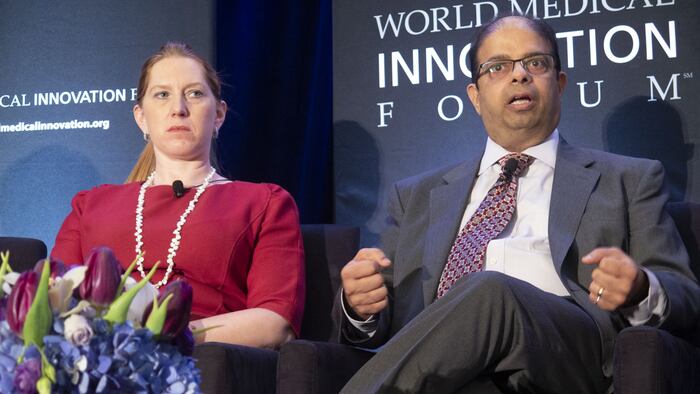
Behtany Hills and Bakul Patel
Life science attorney Bethany Hills and the FDA's Bakul Patel at the 2019 World Medical Innovation Forum in Boston • Source: Ferdous Al-Faruque

As medtech artificial intelligence and machine learning (AI/ML) programs are expected to boom in the near future, the US Food and Drug Administration is racing to develop regulations. According to a top FDA official, while the agency has some authority to regulate such products, it may require more authorities from Congress to achieve the kind of regulatory oversight that’s needed.

The FDA held a two-day multi-stakeholder workshop late last month at the National Institutes of Health (NIH) in Bethesda, MD,...

Medtech Insight Podcast

Keep up with the top medtech business and regulatory news.

Medtech Insight brings you interviews and analysis, on the go.

More from AI

Digital Health Roundup: Digital Therapeutics Navigate GLP-1, Immersive Gaming; DHCoE AI Framework; Hello Heart

In this week’s Digital Health Roundup, Medtech Insight’s Ryan Nelson highlights Click Therapeutics’ FDA-cleared digital therapeutics (DTx) for depression and Sinaptica Therapeutics’ personalized neuromodulation for Alzheimer’s patients. Marion Webb discusses her interview with MindMaze’s John Krakauer on their gaming-focused DTx to help people recover from serious brain injuries. Elizabeth Orr introduces new voting members of the new Digital Health Advisory Committee and Natasha Barrow discusses Hello Heart’s new symptom-tracking feature in their heart-focused app.

News We’re Watching: New FDA Approvals For Breast Implant, Colon Cancer Test, Imaging Agent; TAP Expansion, AI Standards

This week, Establishment Labs Holdings announced the FDA gave it premarket approval for Motiva breast implant, Cologuard lands FDA approval for Cologuard Plus and GE HealthCare gets FDA nod for a new imaging agent. The FDA announces another expansion for TAP into ophthalmology and radiology. The AAMI and CTA will join forces to develop standards for AI and ML-enabled health care products.  

MI-DigitalTechnologies (Premium-1): Optimal Imaging Frequency After Spine SBRT: Balancing Surveillance and Patient Care

 
• By 

A Deep Dive into Evidence-Based Guidelines, Clinical Considerations, and Evolving Practices for Post-SBRT Imaging in Spinal Tumor Patients

News We’re Watching: Neuralink’s Blindsight Gets FDA Breakthrough Device Tag; FDA Pump Recalls, Guidances; Discure, DeepLook Bolster Coffers

This week, Neuralink announced it received US FDA breakthrough device designation for a device to restore sight; medtechs Discure and DeepLook secured new funding; FDA pump recalls from B. Braun Medical and Fresenius Kabi; Axonics prevails in patent infringement lawsuit with Medtronic; Merit Medical buys Cook Medical for $210m.

More from Digital Technologies

Pilot To Program: FDA Issues Accreditation Scheme For Conformity Assessment Draft Guidances


The US FDA has published a trio of draft guidance documents for its Assessment Scheme for Conformity Program, which began as a pilot in September 2020 to capitalize on the role of standards in the regulation of medical devices.

News We’re Watching: Neuralink’s Blindsight Gets FDA Breakthrough Device Tag; FDA Pump Recalls, Guidances; Discure, DeepLook Bolster Coffers

This week, Neuralink announced it received US FDA breakthrough device designation for a device to restore sight; medtechs Discure and DeepLook secured new funding; FDA pump recalls from B. Braun Medical and Fresenius Kabi; Axonics prevails in patent infringement lawsuit with Medtronic; Merit Medical buys Cook Medical for $210m.

EU Launches Call For Regulatory Sandbox Initiative To Accelerate Medtech Innovation


The EU IHI’s eighth call for action also encourages innovative medtech approaches to tackling cardiovascular disease and osteoarthritis and patient-centered endpoints that can benefit from advancements in digital health.