Zydus Cadila Testing Three-Dose COVID-19 Vaccine

100-150 Million Doses Could Be Available By Year-End

Zydus Cadila is to begin testing a three-dose recombinant DNA vaccine candidate in Phase III Indian trials, which might enter late-stage development ahead of Inovio and AnGes. The company promised to provide 100-150 million doses by end of 2021 at the J.P. Morgan Conference, though adherence could be a roadblock.

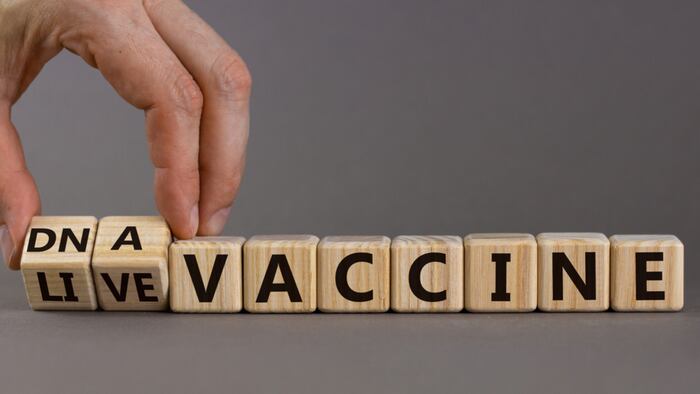
Male hand flips wooden cubes and changes the inscription 'live vaccine' to 'DNA vaccine' or vice versa.
A DNA Vaccine Against COVID-19 Could Be The First In Humans • Source: Shutterstock

Indian firm Zydus Cadila is to commence Phase III trials of its recombinant DNA vaccine candidate ZyCoV-D as a three-dose COVID-19 vaccine, the protocol registered prospectively on India’s online clinical registry on 12 January and modified on 18 January indicated.

If things go to plan and enrolment begins on 20 January, the company could initiate its late-stage trials ahead of...

Scrip Podcast

Keep up with the top pharma business news of the week. On the go.

Scrip brings you a weekly bulletin of top picks.

More from R&D

ProGen’s Dual Agonist Obesity Contender Gains Momentum With Rani Partnership

 
• By 

The CEO of South Korean biotech shares how his company was able to reach a partnership with Rani so quickly and why it is confident in its GLP-1/GLP-2 dual agonist for obesity and diabetes, despite recent disappointing clinical results for its sole rival.

Sciwind Eyes Differentiation For Ecnoglutide In Highly Competitive Arena

 
• By 

Chinese firm Sciwind has revealed additional Phase III findings for its promising once-weekly GLP-1 agonist ecnoglutide, just one asset in a burgeoning Chinese sector that could see the emergence of new rivals to current global leaders in obesity and diabetes.

Fosun ALK/ROS1 Inhibitor Shows 1L Promise In Advanced NSCLC

 
• By 

Interim results from the Phase III REMARK study presented at WCLC showed the Chinese company’s second-generation ALK/ROS1 inhibitor met its primary endpoint as a first-line therapy in ALK-positive advanced NSCLC.

Sponsored By:

Nancy Tests SPARC-931-part

The article discusses the impact of upcoming patent expirations in oncology biologics on biosimilar developers, highlighting the opportunities in Antibody-Drug Conjugates (ADCs) and Bispecific Antibodies (BsAbs). It explores the challenges posed by the structural complexities of these biologics, necessitating new bioanalytical tools and manufacturing processes. The evolving regulatory landscape, with contributions from EMA, FDA, and WHO, offers flexible pathways but also presents challenges. The article underscores the potential for biosimilars to generate significant cost savings and enhance patient access to cancer treatments over the next decade.

More from Scrip

EHA: Lilly’s Jaypirca Posts First Phase III Triplet Win In CLL While BTK Degraders Advance - Clone

Lilly's first Phase III triplet win opens the door to a label expansion in BTK-pretreated CLL, with analysts suggesting Jaypica could attain blockbuster status. However, the window to capitalize may be brief as next-generation BTK degraders close in with head-to-head trials.

Top 10 Drugs Q1 2026: New Sheriff In Town As Mounjaro Unseats Keytruda

Mounjaro, Eliquis, and Darzalex buck the Q1 trend to make gains